
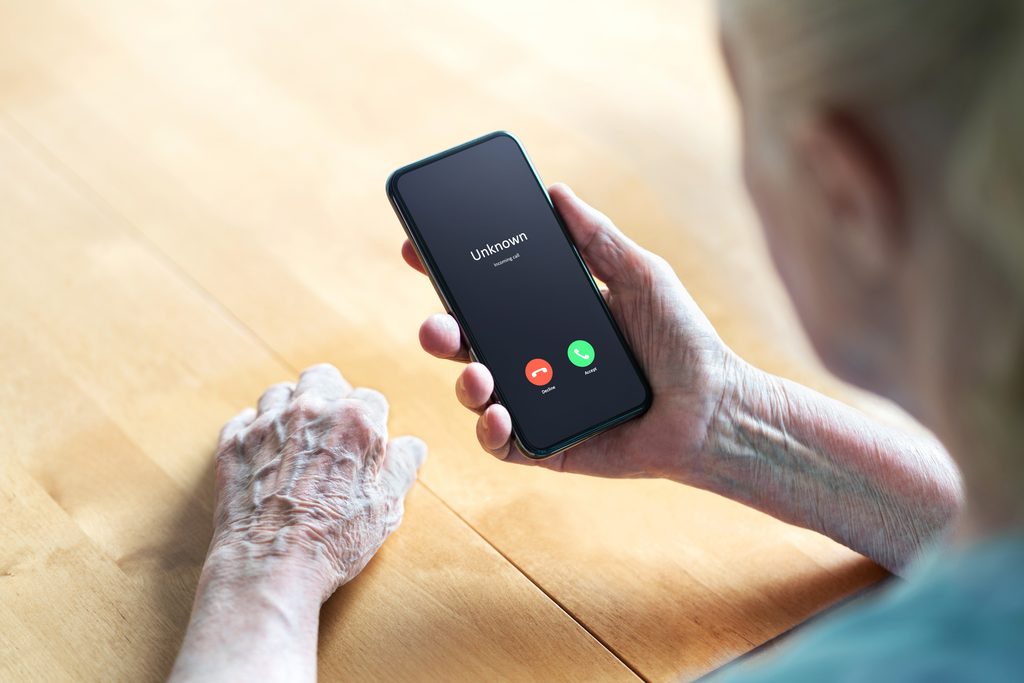
Imagine receiving a phone call from your grandchild saying, “Grandma, Grandpa, I’m in trouble. I need money right away. Please don’t tell anyone!”
Your first instinct may be to help. But before you send money, stop and think. Is it really your grandchild calling, or could it be a scammer pretending to be someone you love?
Family emergency scams, sometimes called grandparent scams, are becoming increasingly convincing. Scammers are using technology, including artificial intelligence (AI), to imitate someone’s voice or even create fake videos that make an emergency seem real.
How Does the Scam Work?
A scammer may call pretending to be your grandchild, another family member, or someone representing them. They may claim that your loved one has been arrested, been in a car accident, or is facing another emergency and needs money immediately.
They may even know personal details about your family, such as names, locations, or other information found on social media, making their story sound believable.
The caller will often insist that you send money immediately through one of the following methods:
- Wire transfers through companies such as Western Union or MoneyGram.
- Cryptocurrency.
- Payment apps.
- Gift cards, with instructions to provide the numbers on the back.
The scammer may also tell you to keep the situation a secret and not contact anyone else. This is intentional. They want you to panic, act quickly, and send money before you have an opportunity to verify the story.
How Can You Protect Yourself?
If someone calls claiming that a family member is in trouble and needs money, remember these important steps:
1. Slow Down.
Don’t let anyone pressure you into making an immediate decision. Hang up and tell the caller you need time to verify the situation.
2. Contact Your Family Directly.
Call your grandchild or another family member using a phone number you already know. You can also contact someone else in the family to help confirm whether the emergency is real.
Establish a Family “Safe Word”
One way to help protect your family from emergency scams is to establish a secret family safe word or phrase.
Choose a word or phrase that only your immediate family members know. If someone calls claiming to be your grandchild or another loved one and says they are in trouble, ask them for the family safe word.
If they cannot provide it, that should be a warning sign. Do not send money or share personal information until you have independently verified their identity.
A few tips for creating a family safe word:
- Choose something unique that would be difficult for someone else to guess.
- Avoid obvious choices such as a pet’s name, birthday, or family member’s name.
- Share the word only with trusted family members.
- Never post it on social media or share it publicly.
- Change it periodically if you believe someone outside the family may have learned it.
Make a plan with your family before an emergency happens. Take a few minutes at your next family gathering to choose a safe word and make sure everyone knows how to use it.
Remember, a scammer may sound like your grandchild, but they won’t necessarily know your family’s secret word!
3. Don’t Trust What You Hear or See.
Even if the caller sounds exactly like your loved one or appears on a video call, it doesn’t guarantee they are who they claim to be. AI technology can be used to imitate voices and create convincing fake videos.
4. Never Send Money Through Unusual Payment Methods.
Be especially cautious if someone insists that you pay using gift cards, cryptocurrency, wire transfers, or payment apps. These are common methods scammers use because recovering the money can be difficult.
5. Talk to Someone You Trust.
Scammers want you to keep the situation secret. Before sending money or sharing personal information, talk with another family member or someone you trust.
Already Sent Money? Act Quickly.
If you believe you’ve been targeted by a scam or have already sent money, contact the company or payment service you used immediately. Depending on how you paid, they may be able to stop or reverse the transaction.
You should also report the incident to the Federal Trade Commission (FTC).
Report a scam at: ReportFraud.ftc.gov
Remember: It’s Okay to Hang Up and Verify!
Scammers count on your love for your family and your desire to help in an emergency. Don’t let fear or pressure cause you to make a decision you may regret.
A real family emergency can wait a few minutes while you verify the facts. Taking the time to make a phone call could save you thousands of dollars.
Share this information with your family and friends. A little awareness can go a long way toward protecting the people you care about!
Information adapted from the Federal Trade Commission (FTC).